There is a lovely sort of balance that happens when something born from millions of years of solid sediment manages to feel completely weightless. When we were invited to craft this post-tensioned limestone staircase for Lantern House—a contemporary family home near Solihull in Warwickshire—the entire building was being designed around light, proportion, and quiet elegance. While our focus was solely on the engineering and masonry of the stairs, the architecture of the house seemed to naturally arrange itself to celebrate this curved stone staircase, sitting right at the heart of it all.
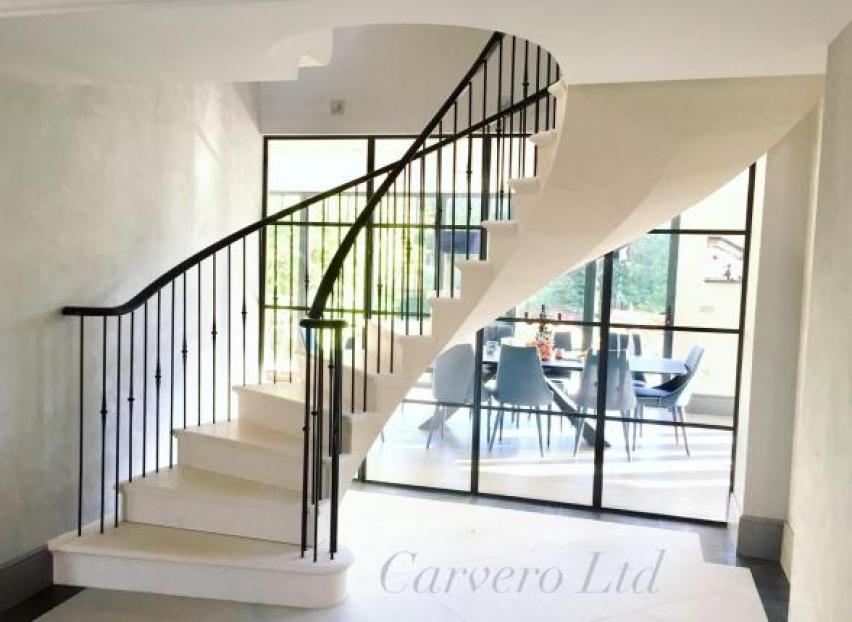
Built from solid natural stone, the structure has all the permanence of limestone, but the presence of something much softer. It’s a floating stone staircase that brings a bit of quiet drama and sculpture to the centre of the house without ever feeling like it's trying too hard.
A Sense of Intrigue
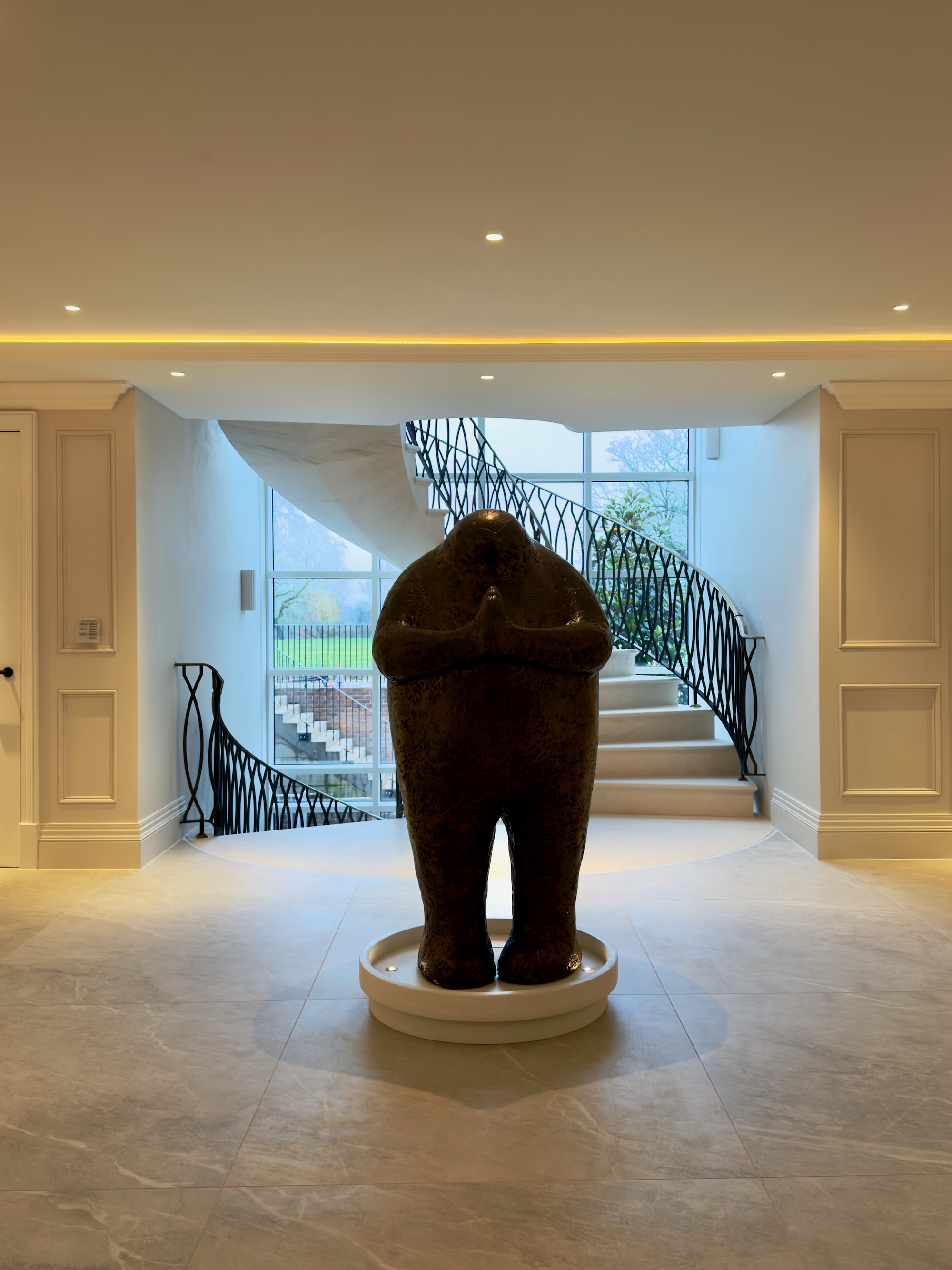
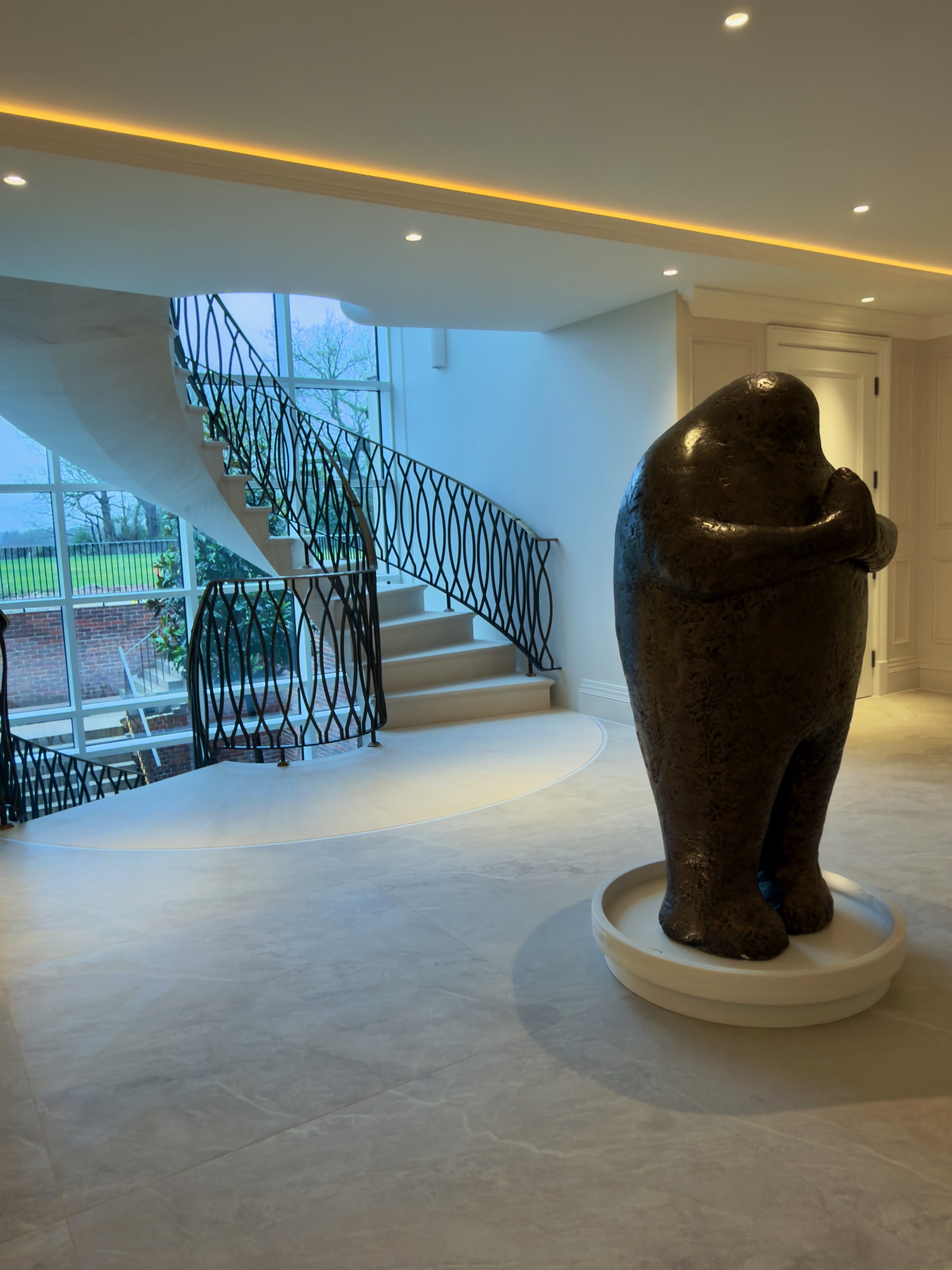
When you walk through the main door, the journey is all about anticipation. The entrance hall is bright and welcoming, but deliberately cozy in height. A heavy, dark bronze sculpture greets you first, standing as a grounded, textured figure in the centre of the hall. Beyond it, the stone staircase sits quietly in the background, happy to wait its turn.
From this first view, you only catch a glimpse of one elegant, curving flight of pale cream natural stone peeking out from behind the sculpture. It’s a beautiful contrast—the deep, static mass of the bronze making our light limestone feel even more luminous. Every surrounding architectural detail in the hall feels deliberately considered to frame this view, inviting a guest's curious thoughts to move further into the house before the full height and scale of the space begins to show itself.
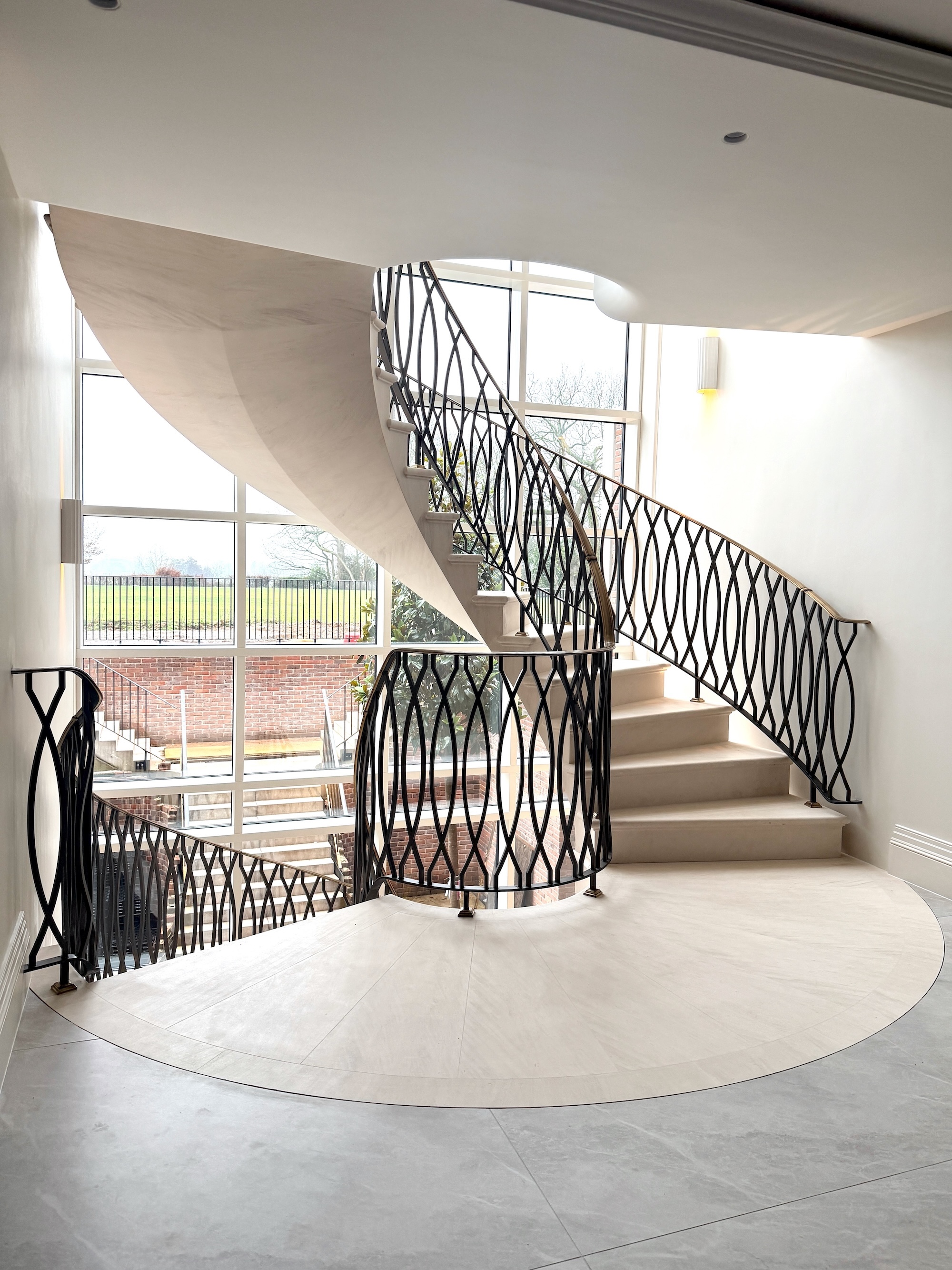
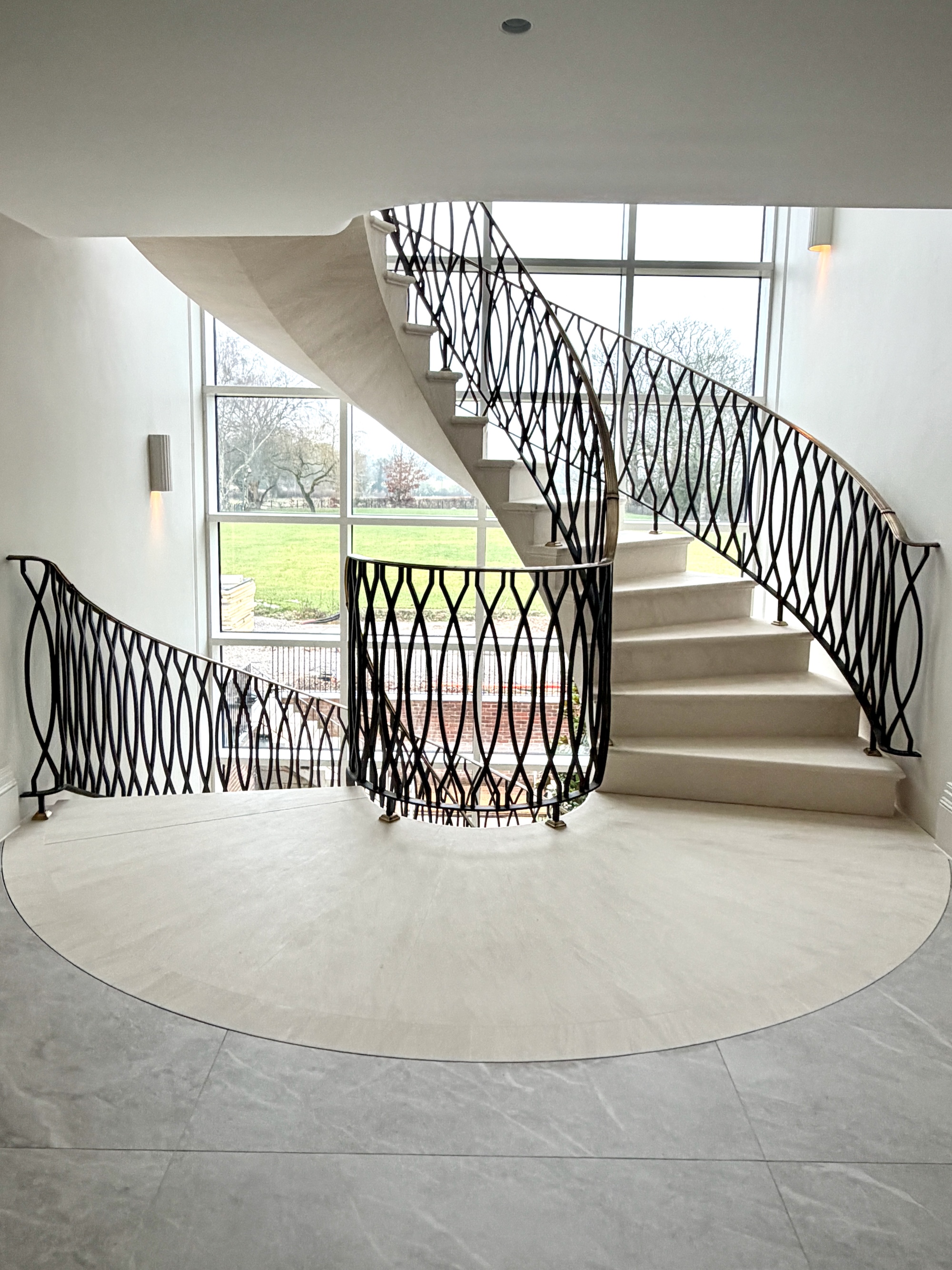
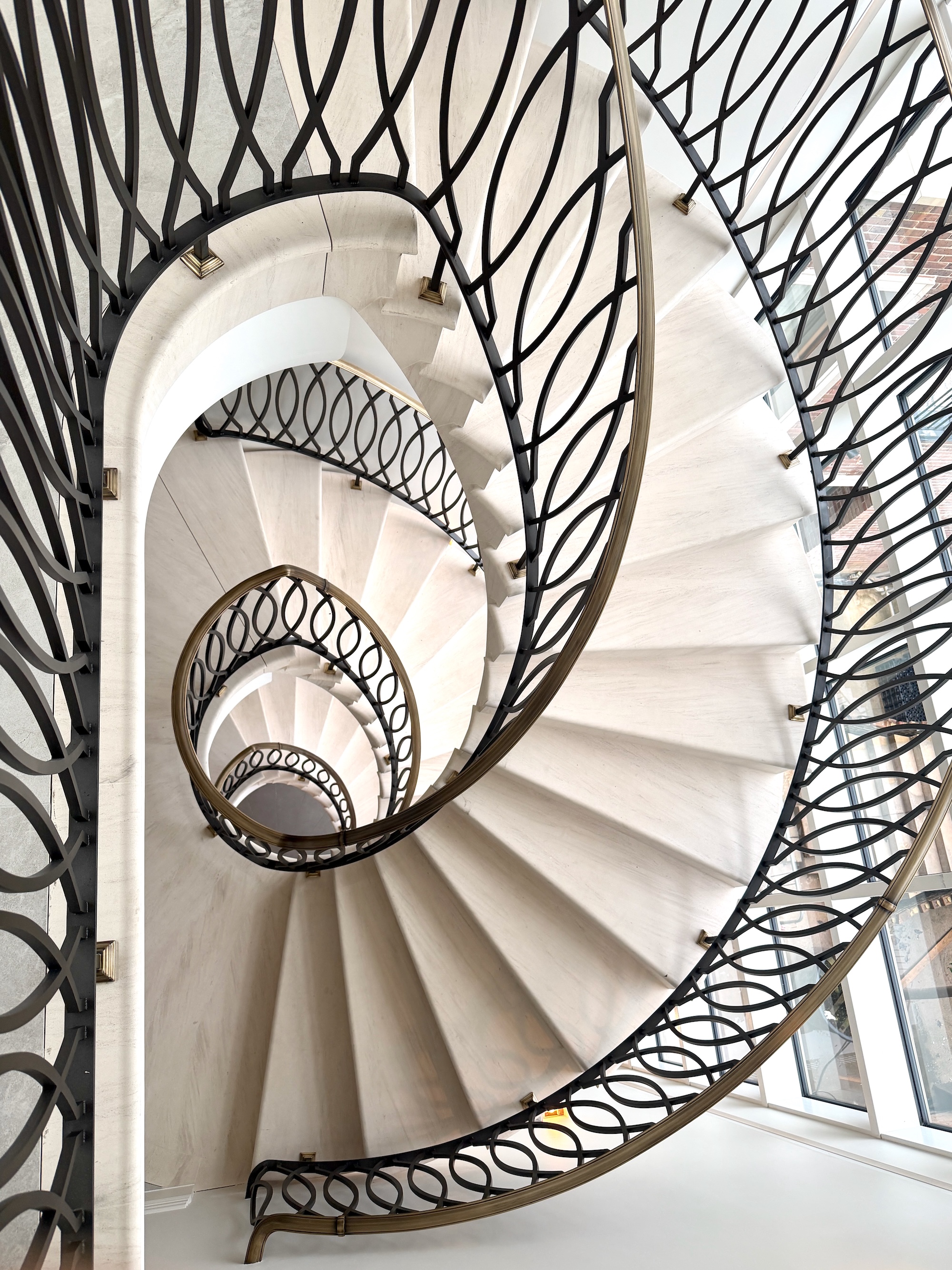
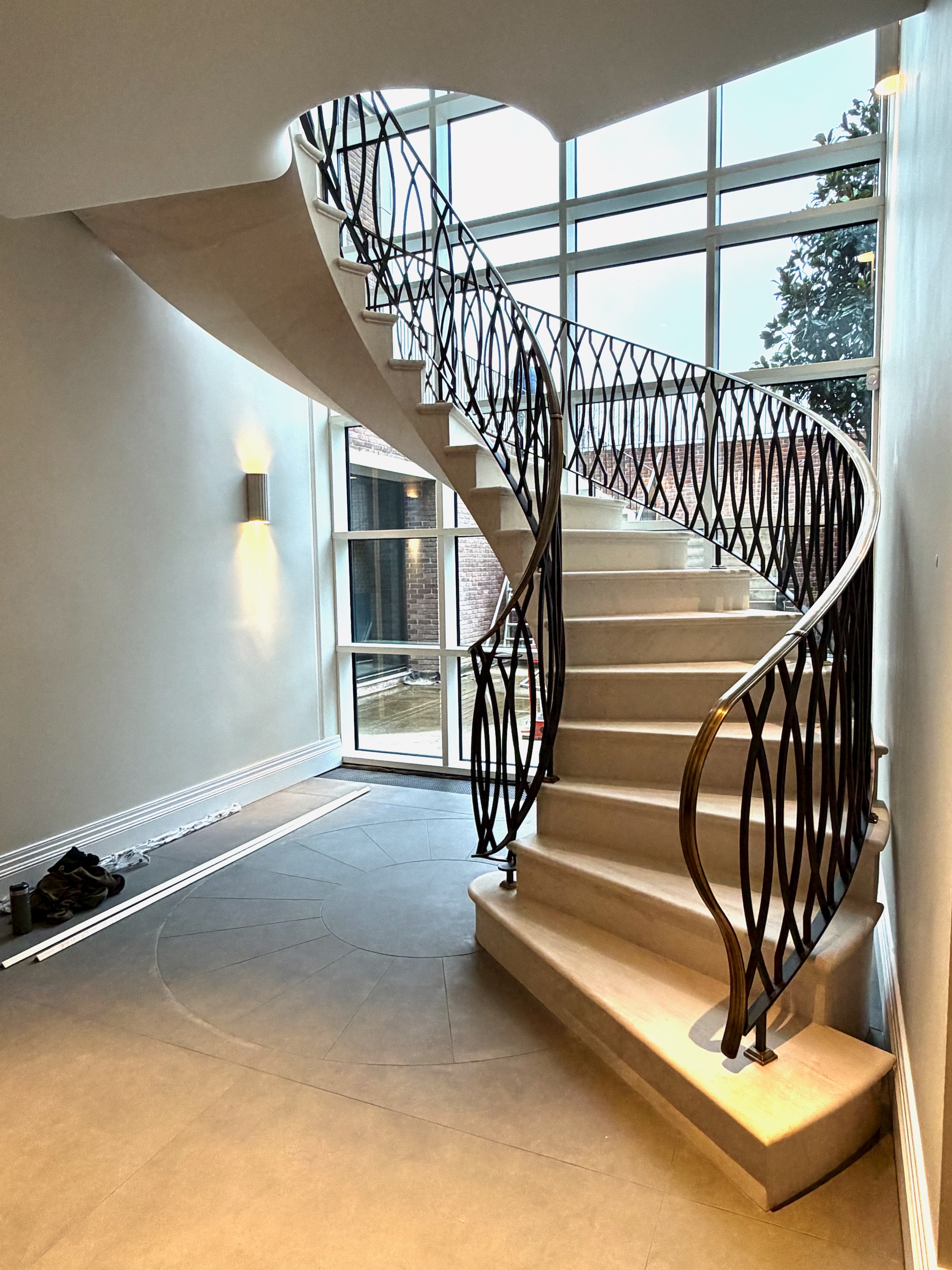
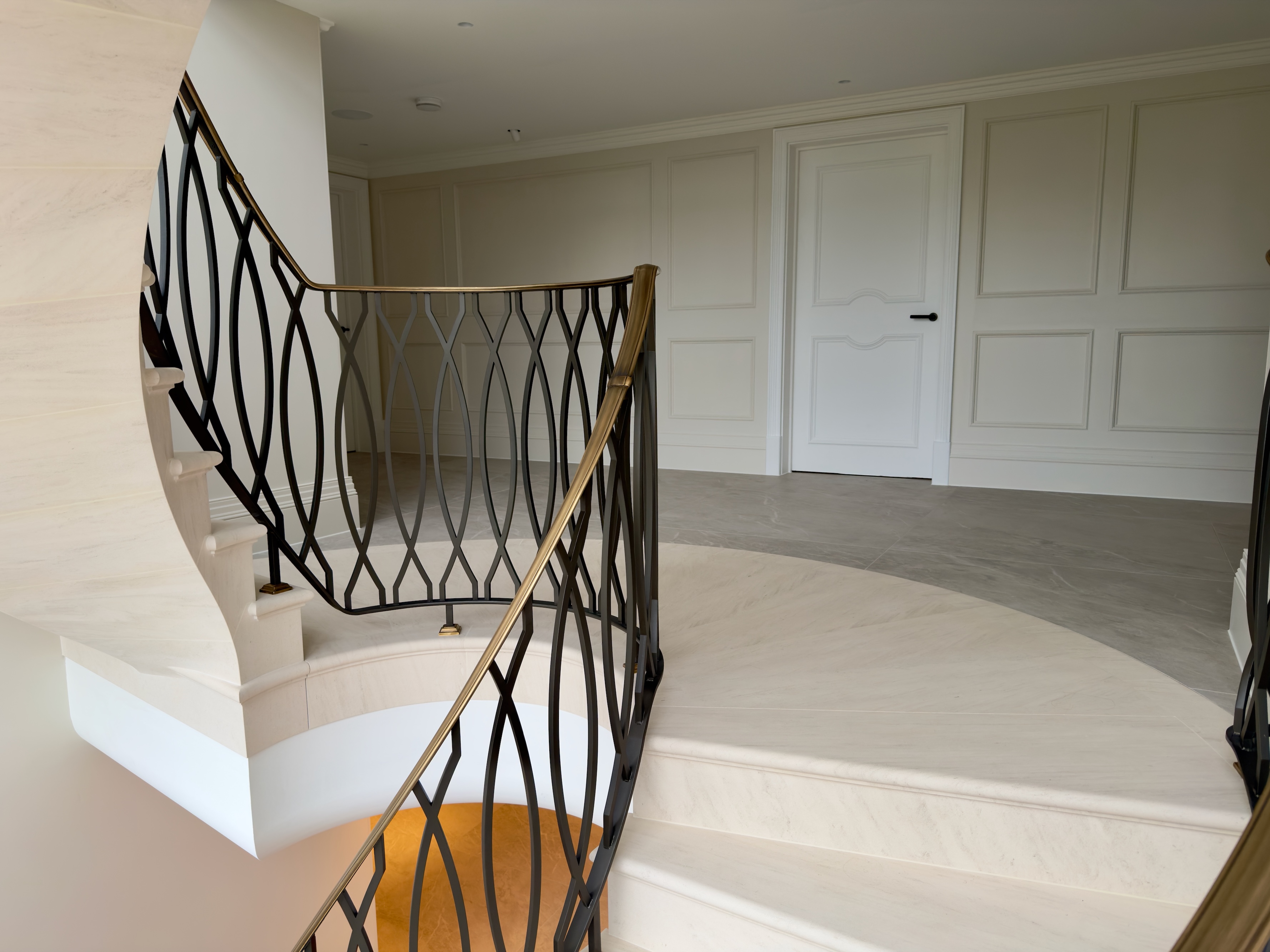
As you step forward, the space opens up beautifully. What first appeared as a single, graceful curve reveals its full journey as a three-flight helical stone staircase. One flight drops down toward the lower ground floor—where the family has a pool, bar, wine cellar, and gym—while two more flights sweep upward toward the bedrooms.
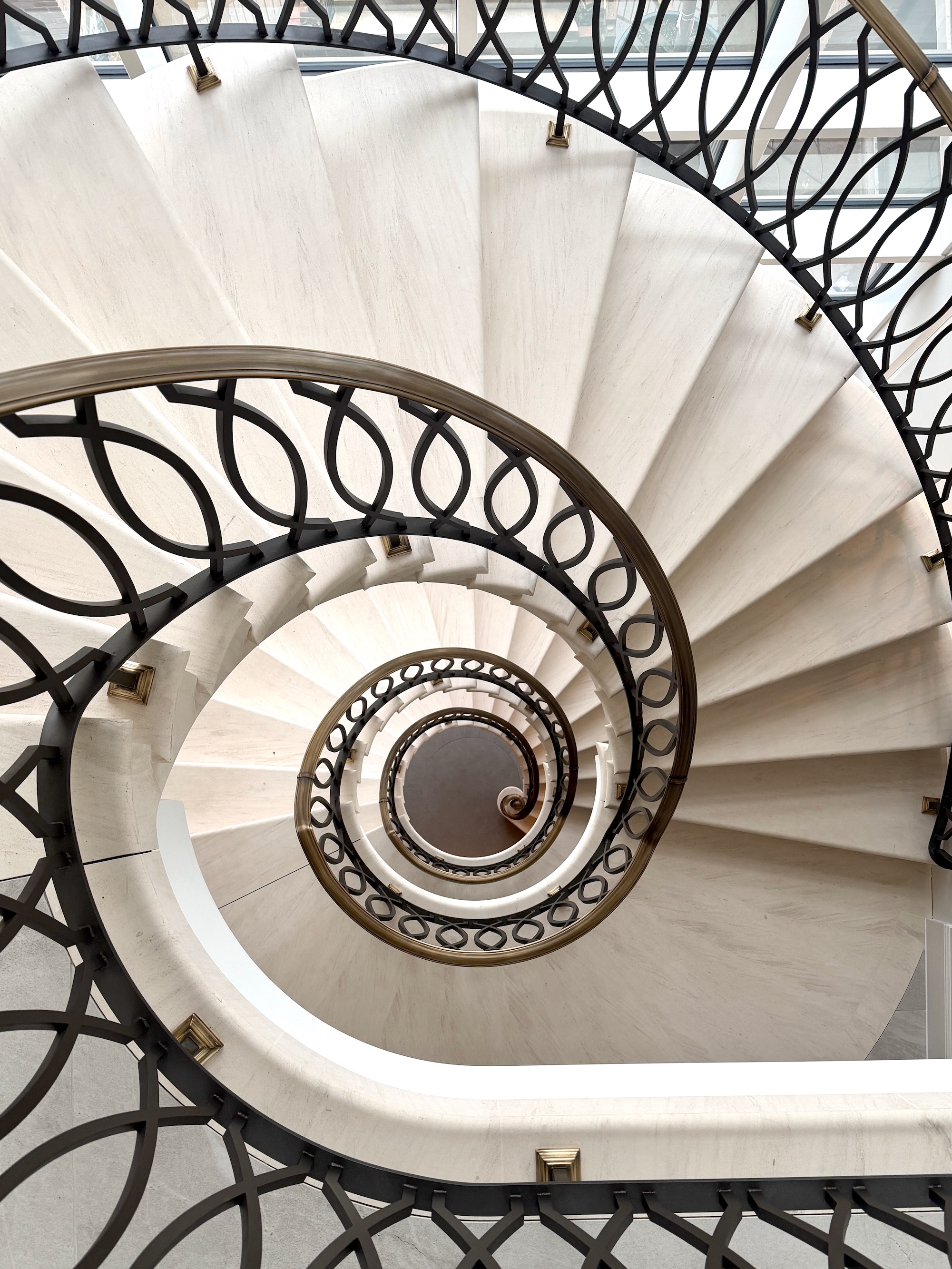
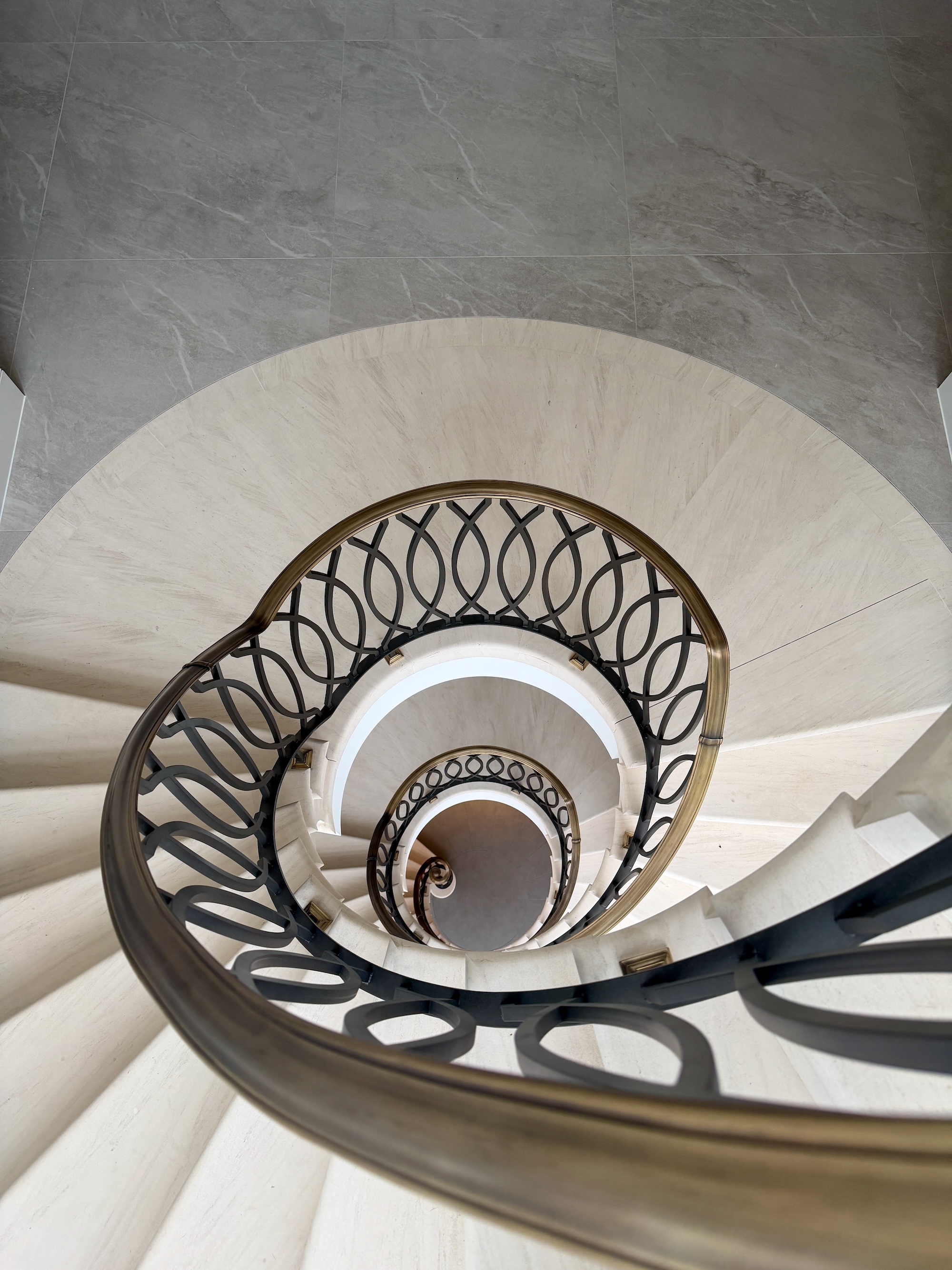
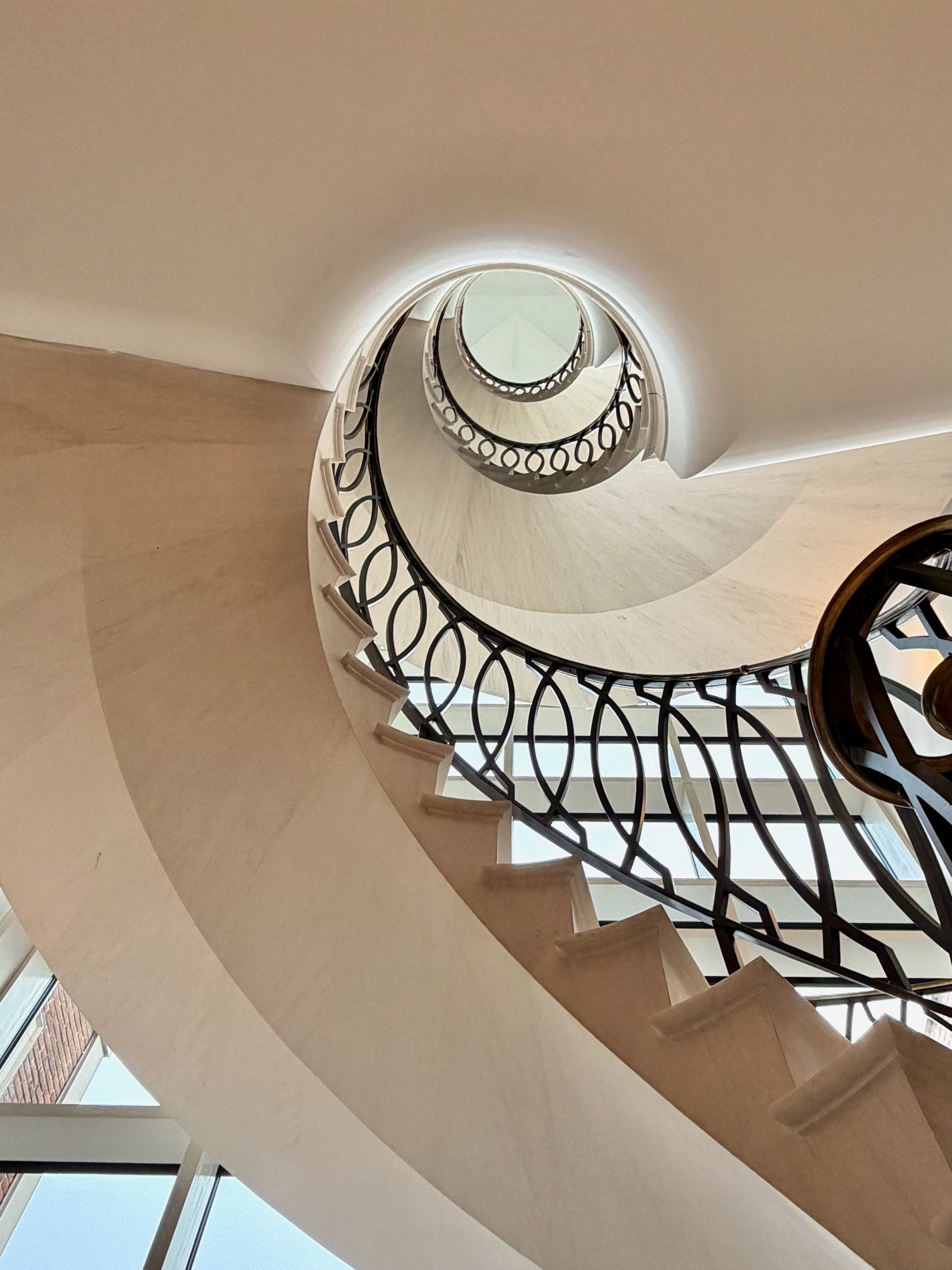
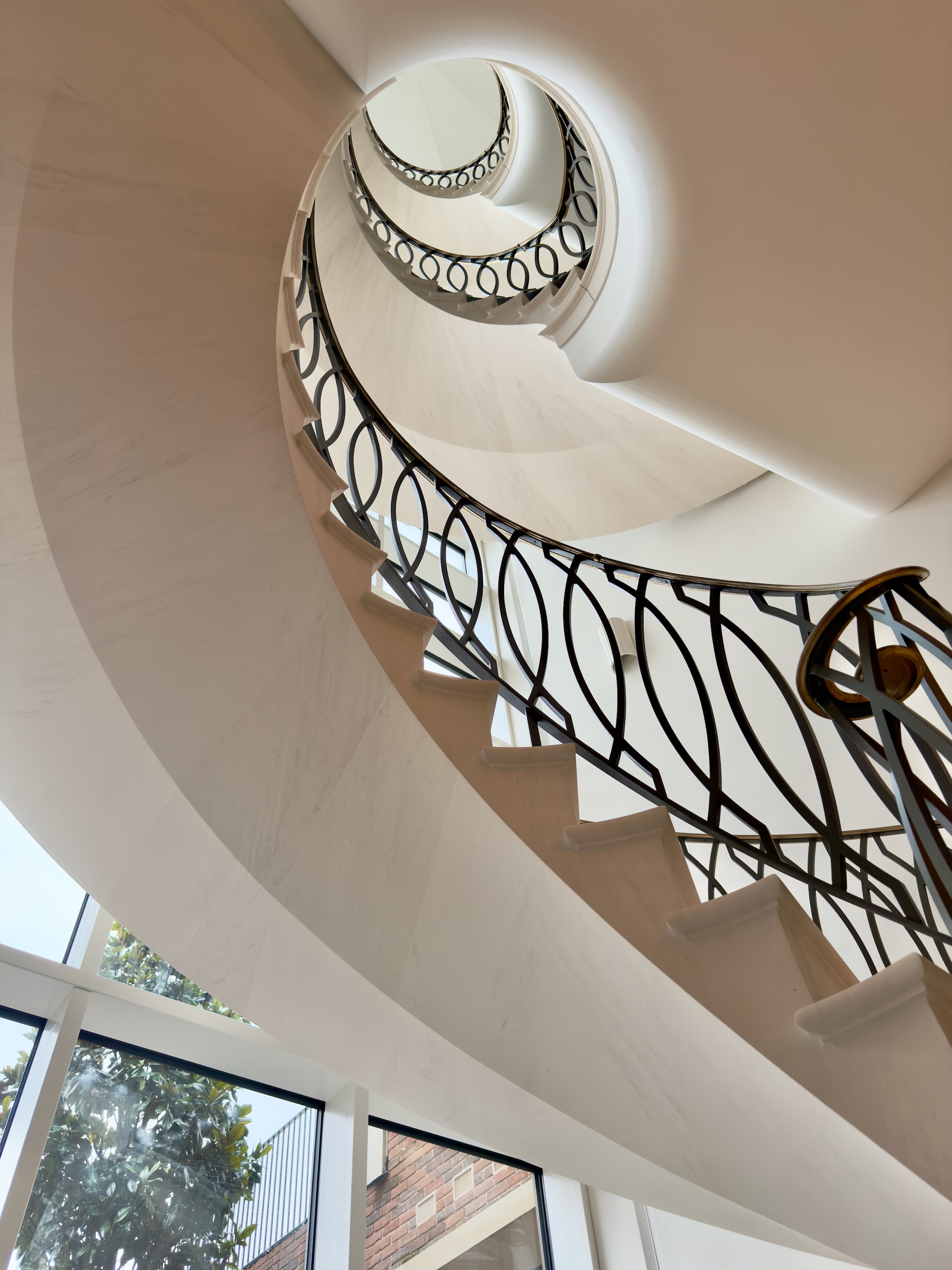
Looking straight down from the very top reveals the true artistry of the layout. The stone steps don't look like an assembly of individual blocks; instead, the inner edges flow together to form a single, completely smooth, uninterrupted volute. It looks like a continuous ribbon of stone twisting endlessly through the centre of the house.
Shifting Light and Soft Shadow
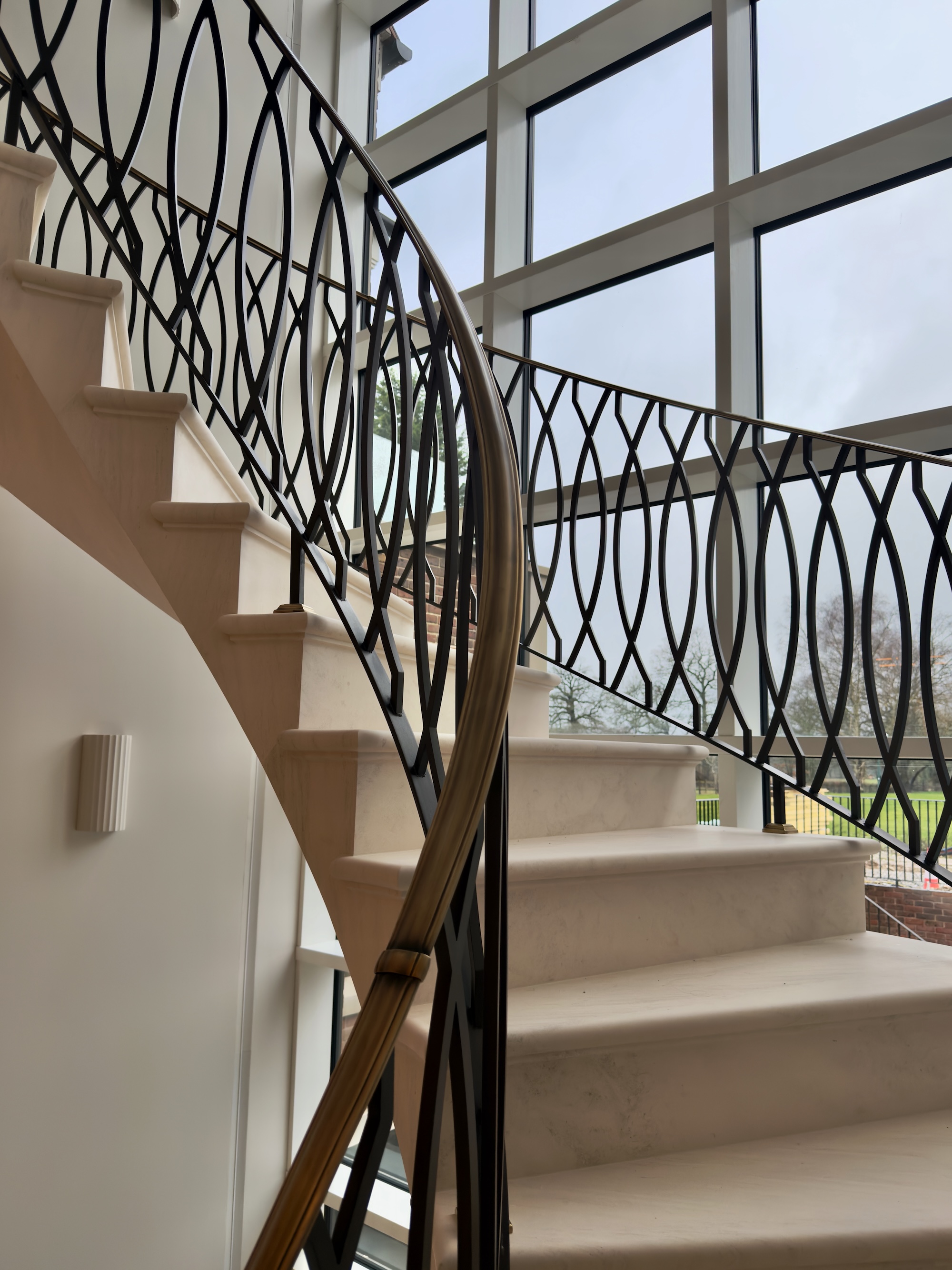
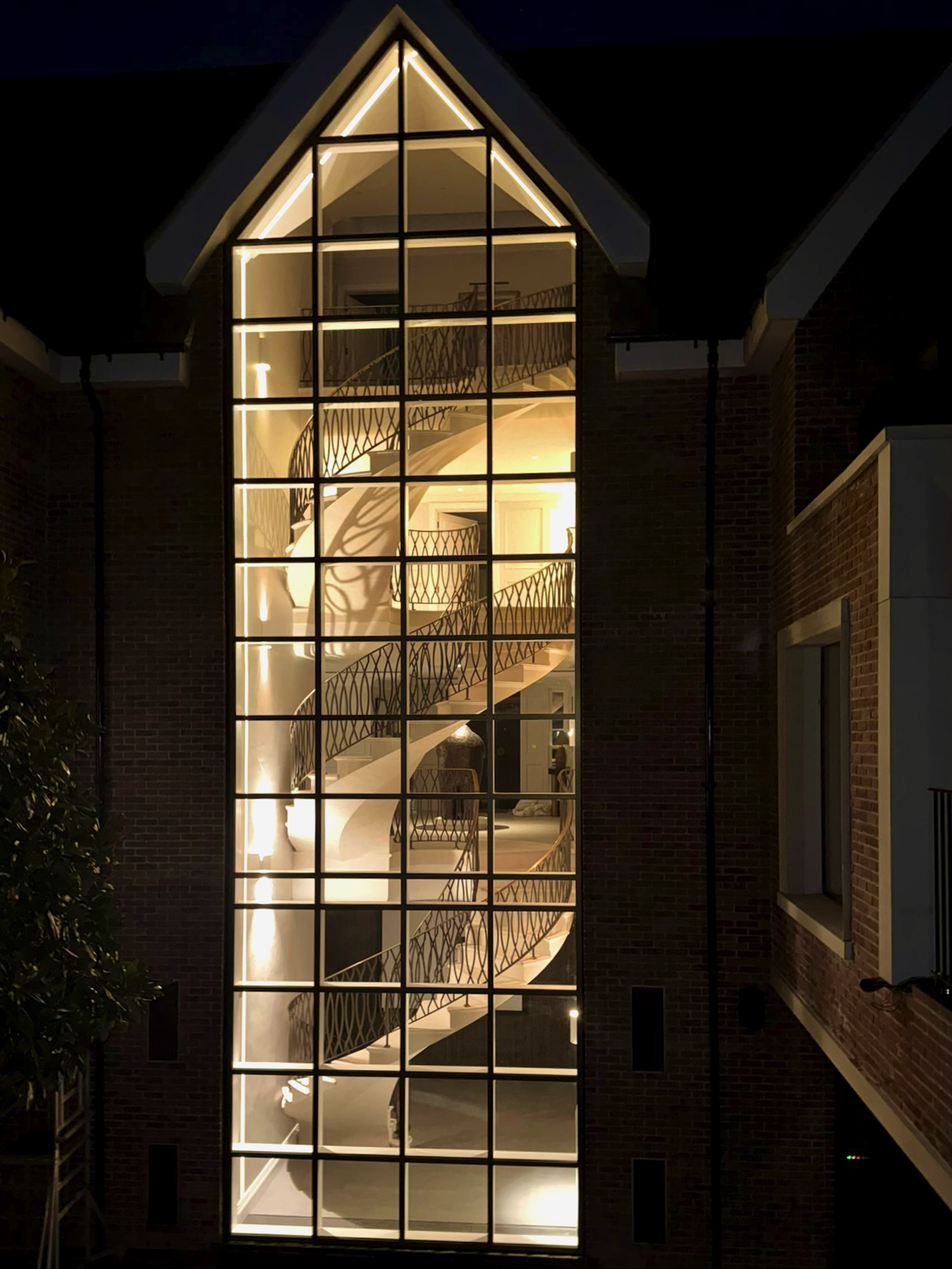
The staircase sits in front of a massive, full-height glazed elevation that stretches all the way from the basement up to the second floor, which means you get to watch the daylight interact with the stone all day long.
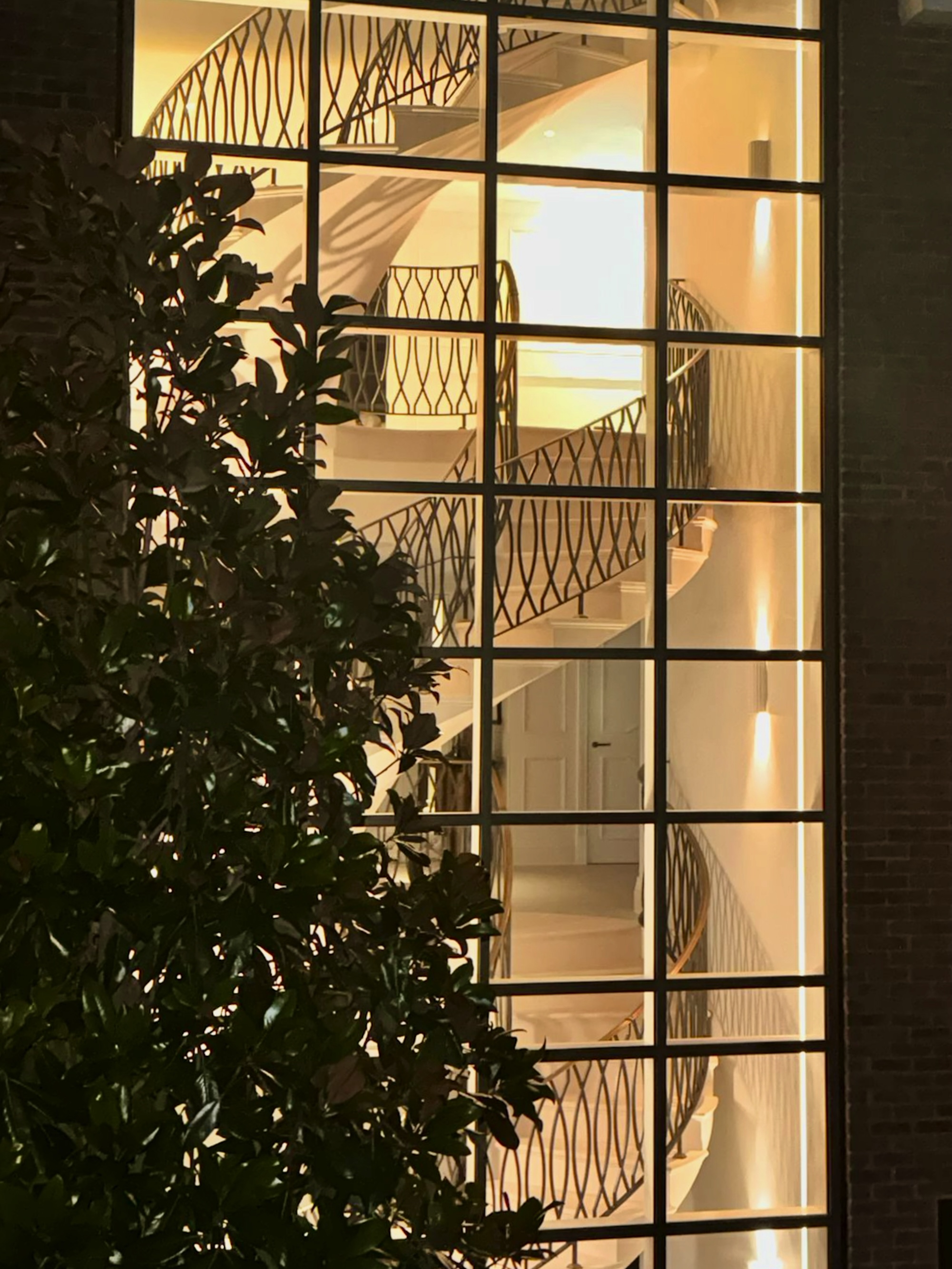
During the day, the sun moves gently across the pale limestone, showing off the subtle veining and soft variations in the stone's surface. At night, when you look back at the house from the garden, the view transforms completely. The stair hall glows warmly from the inside, casting long, soft shadows through the grid of the window and making the three stacked, helical flights look like a quiet architectural lantern against the dark brickwork.
Carved by Hand, Hidden by Engineering
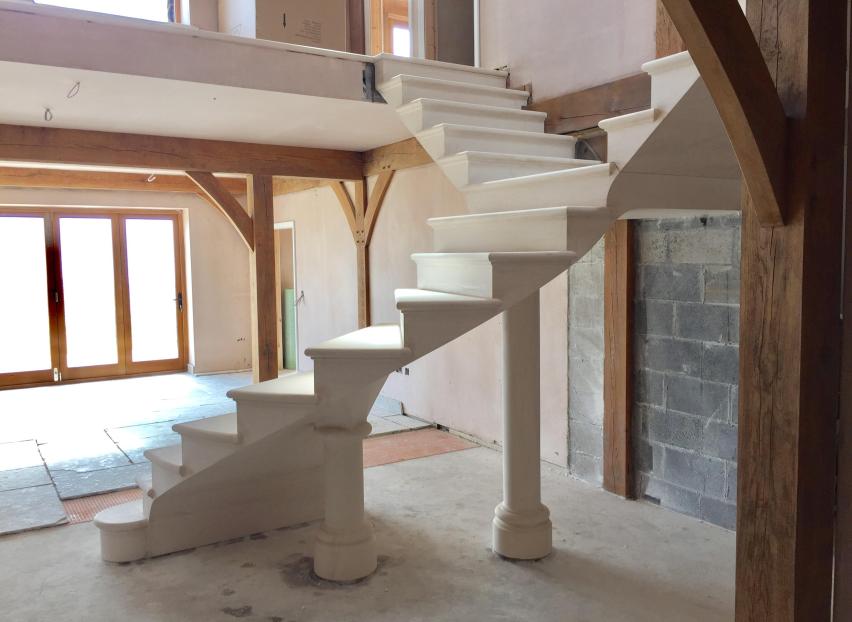
To make 47 solid limestone steps look like they are floating takes an incredible amount of clever engineering, but our goal here was to keep that structural wizardry completely out of sight. This is a post-tensioned stone staircase, which means its strength comes from steel cables hidden deep inside the steps themselves. Because it doesn't need heavy visible supports, it has the clean, light lines of a cantilever stone staircase.
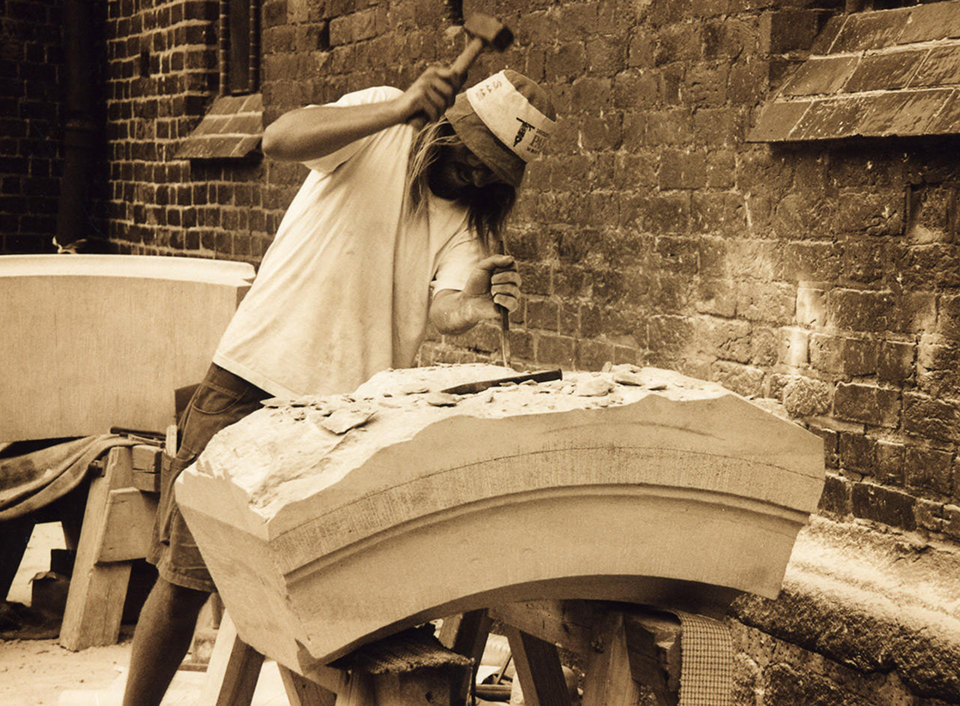
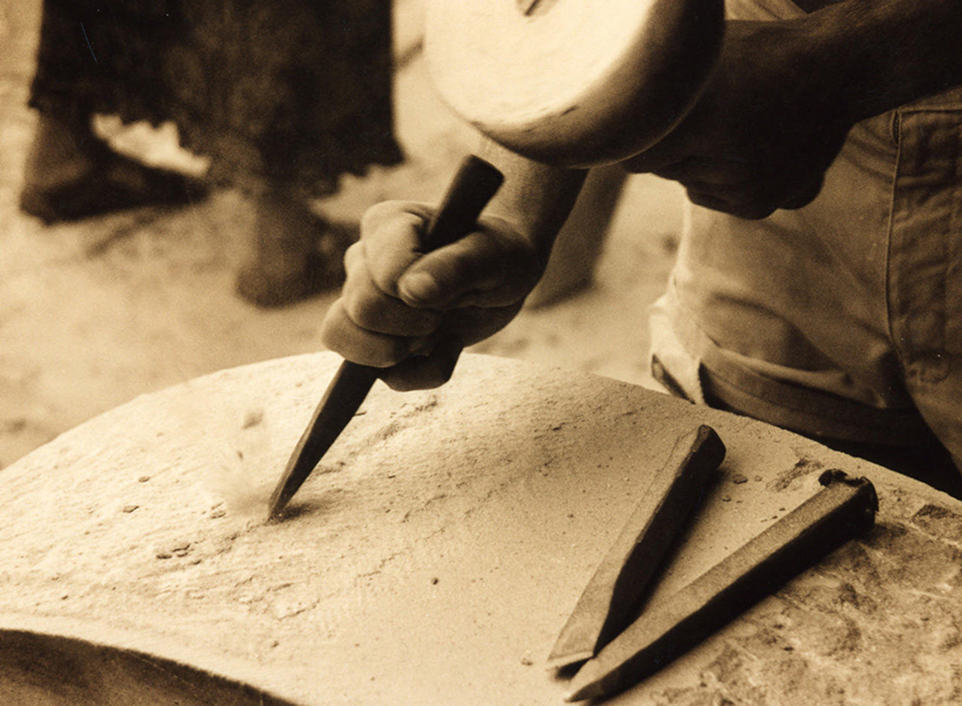
But the real magic isn't in the steel; it’s in the craftsmanship. Every single stone element on this staircase was carved entirely by hand by our stonemasons in our workshop. There’s something incredibly special about knowing that every curve, edge, and surface was shaped by a person, rather than a machine.
When you look closer, you can see that dedication to bespoke stone masonry:
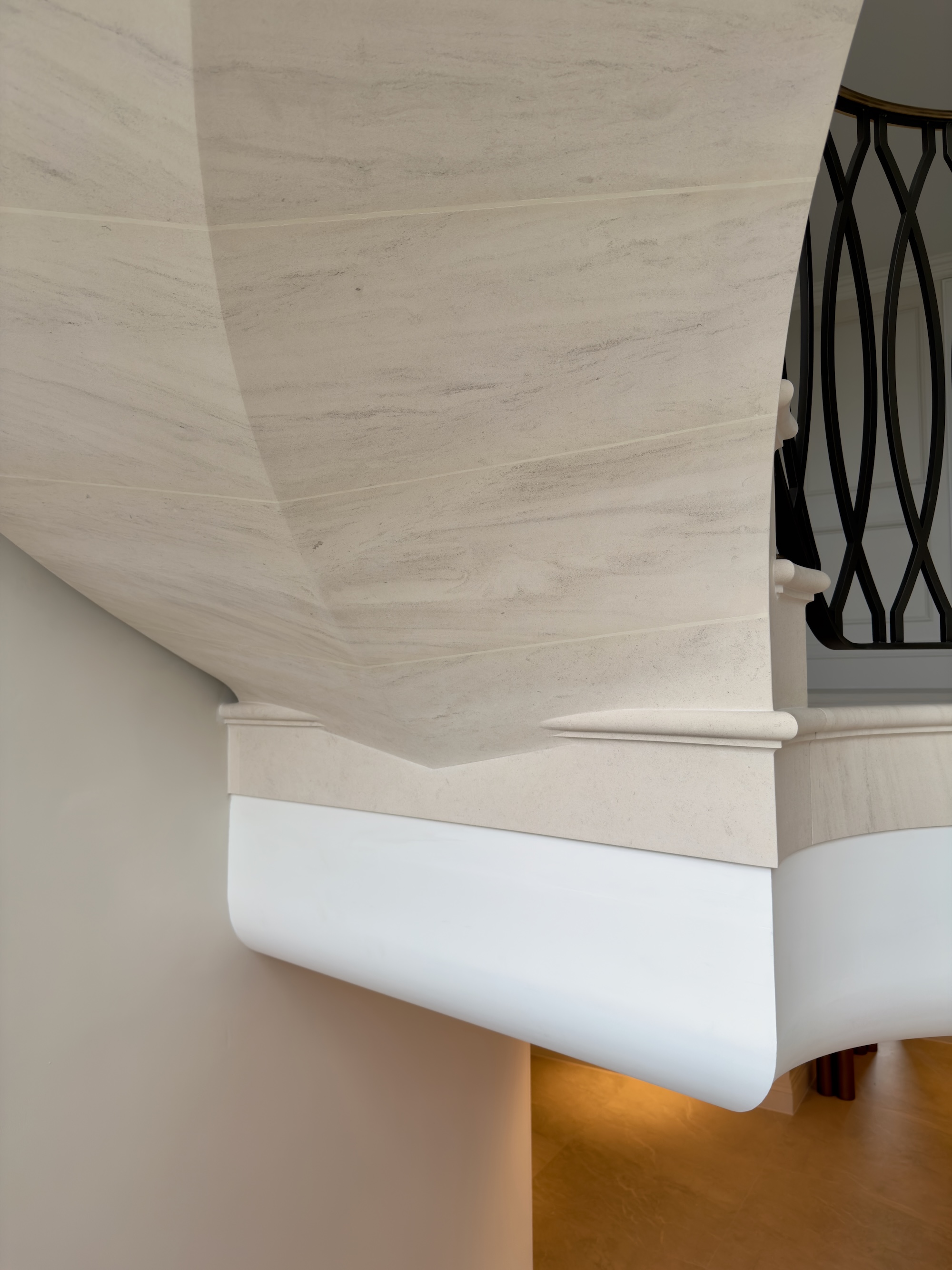
Invisible Joints: The joints between each solid natural stone step are finished flush and matched perfectly to the colour of the limestone, so they disappear from a distance.
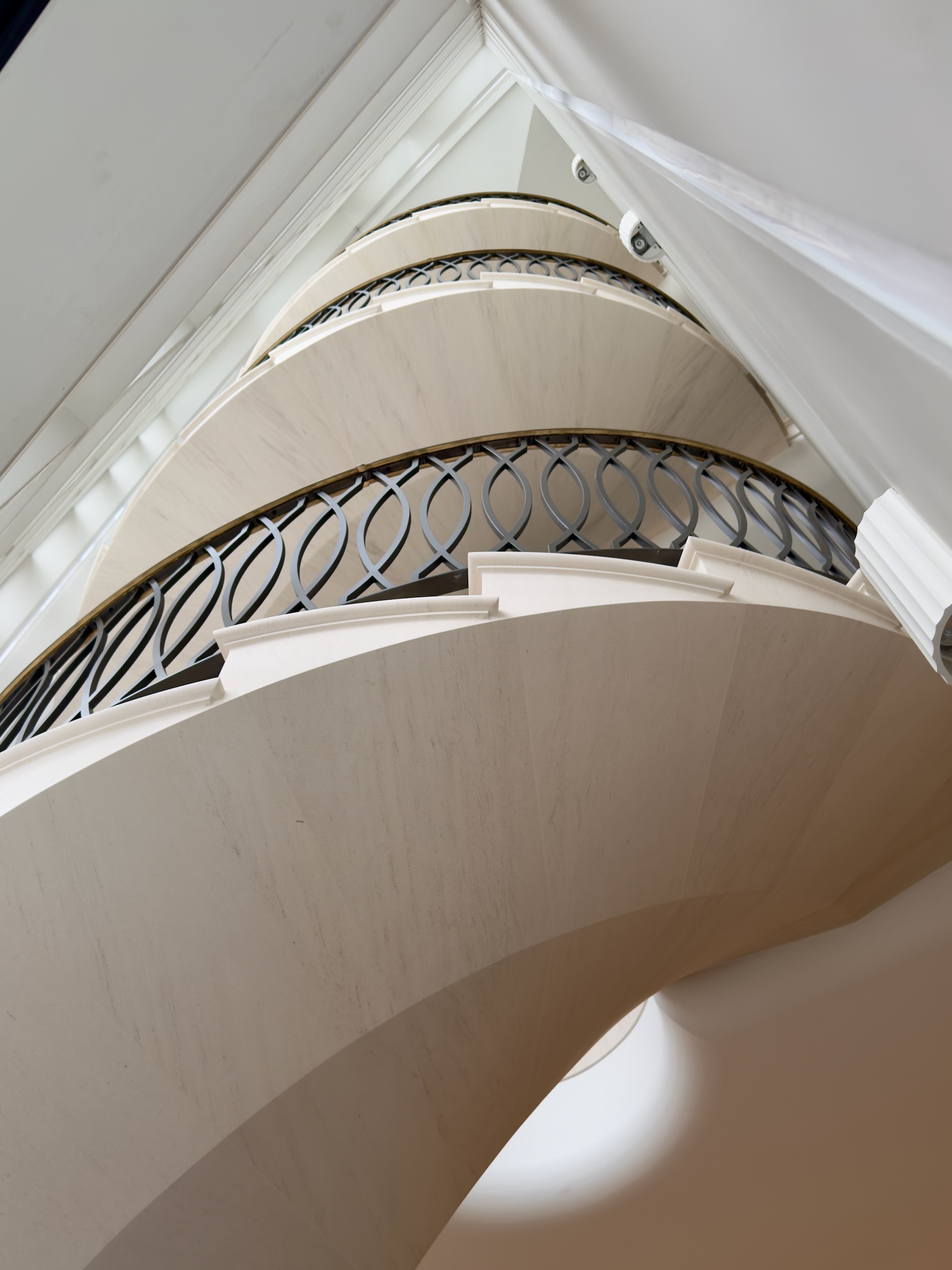
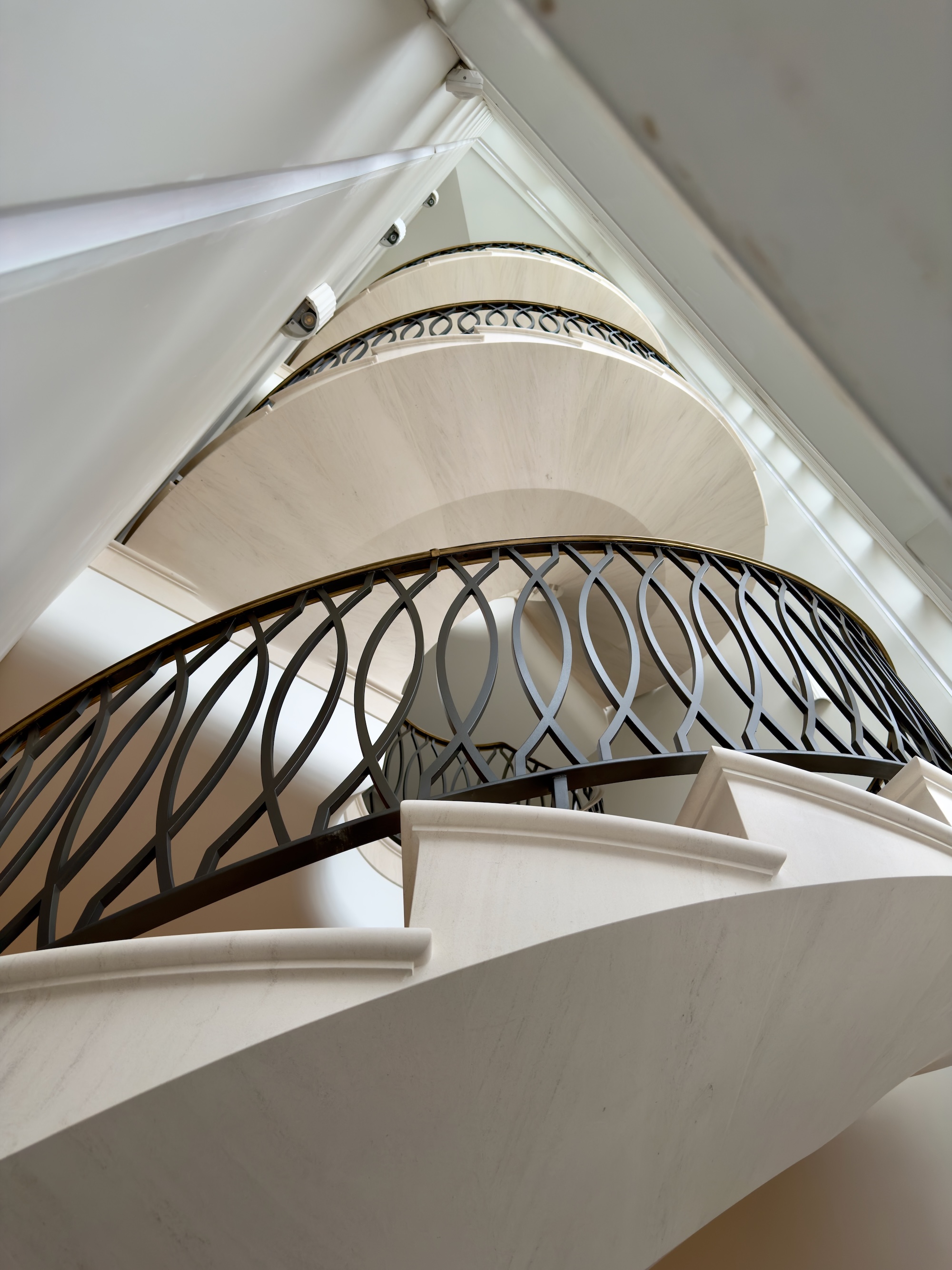
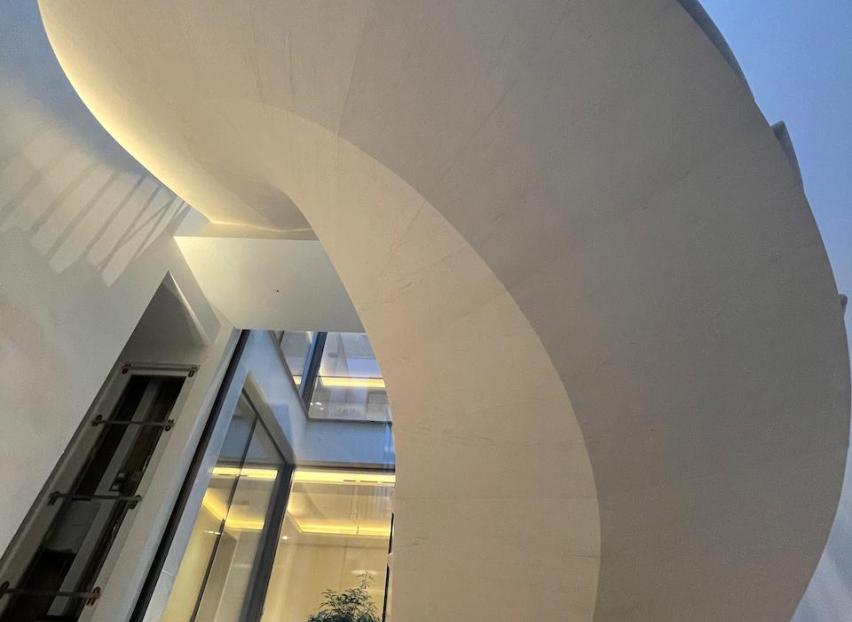
The Hand-Shaped V-Profile: The underside (or soffit) has been meticulously hand-shaped into a crisp V-profile. Looking up from below, this detail creates a sharp, sweeping geometric shadow line that follows the twist of the stair. Our masons re-polished it right on site so it catches the light just right, especially at the landing where the profile cuts cleanly through the apron.
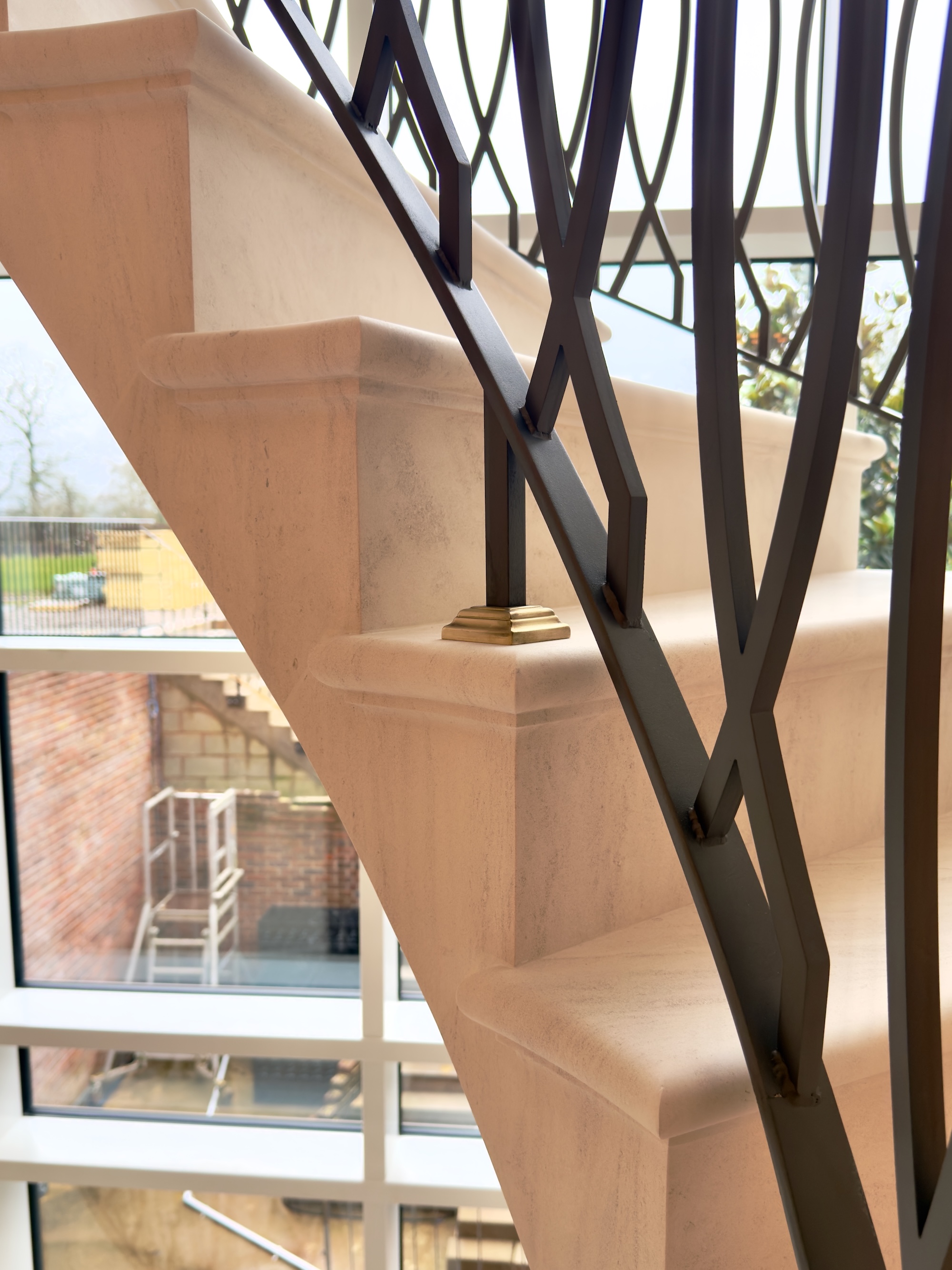
A Touch of Warmth: A fine black metal balustrade follows the curve of the stair, finished with a moulded brass handrail that feels lovely and warm to touch. Where the dark, rhythmic iron fixes into the pale steps, tiny, custom-made brass collars create a neat, highly precise connection between metal and stone.
"We wanted the engineering to be quiet, so the focus stays entirely on the stonework. Every step is a unique piece of solid stone, shaped by hand to last for many lifetimes—maybe even centuries." - Andre Schuberth, Founder, Carvero
A Synergy of Craft
A feature like this can't just be dropped into a house; the surrounding architecture has to rise up to meet it. From the very beginning, Fabric Design Group—who led the master architecture and main contracting role—envisioned Lantern House as a home built entirely around the sweeping gesture of a central helical stair. They designed the entire footprint of the house to orbit this shape, deciding later to build it in solid stone rather than the more typical choices of wood or metal.
The interior design team at Hesellic Design created a wonderful array of beautiful features throughout the rest of the house. Even though they didn't actively tailor their palette to our stonework, their design choices across the rooms carry a shared appreciation for quality that means every single feature and the staircase sit in perfect harmony with each other. Combined with the vital structural engineering calculations from Price & Myers, this close collaboration is the reason the entire space feels seamlessly integrated. Because the architecture was born from the lines of the helix from day one, the staircase feels deeply settled within the home, rather than inserted as an afterthought.
At the end of the day, combining natural cream limestone, simple brass details, and changing daylight does something more than just connect the floors. It gives Lantern House its centre of gravity—a feeling of proportion, permanence, and quiet luxury that still leaves plenty of room for the house to feel calm, open, and full of life.
Crafting Your Vision
Based in Leicestershire, the Carvero teams works closely with architects, designers, contractors, and private clients who appreciate the weight and beauty of raw materials. From our Midlands workshop, we design, manufacture, and install bespoke floating stone staircases, helical stone stairs, and premium architectural stonework for high-end homes across the region and the wider UK—including Solihull, Warwickshire, and Birmingham.
If you are planning a project and would like to discuss how we can bring a piece of permanent, hand-carved craftsmanship into your space, please get in touch with our team.